Total Knee Replacement

Replacing the worn knee surfaces with a plan built around your movement.

Total knee replacement removes damaged cartilage and bone from the knee and resurfaces the joint with metal and plastic components. The goal is to reduce arthritic pain, improve function, and create a knee that is stable for daily life.

Mechanical and kinematic knee alignment comparison
Direct Answer

What is total knee replacement?

Total knee replacement, also called total knee arthroplasty, replaces the damaged bearing surfaces of the knee. The end of the thighbone, top of the shinbone, and sometimes the kneecap surface are prepared for implants.

The surgery is usually considered when knee arthritis causes pain, stiffness, deformity, or loss of function that no longer responds well enough to nonsurgical care.

At TJS: total knee replacement planning includes the patient's deformity, ligament balance, alignment target, implant choice, pain-control plan, and recovery setting.
What Gets Decided

The key decisions in a knee replacement plan

01

Total or partial?

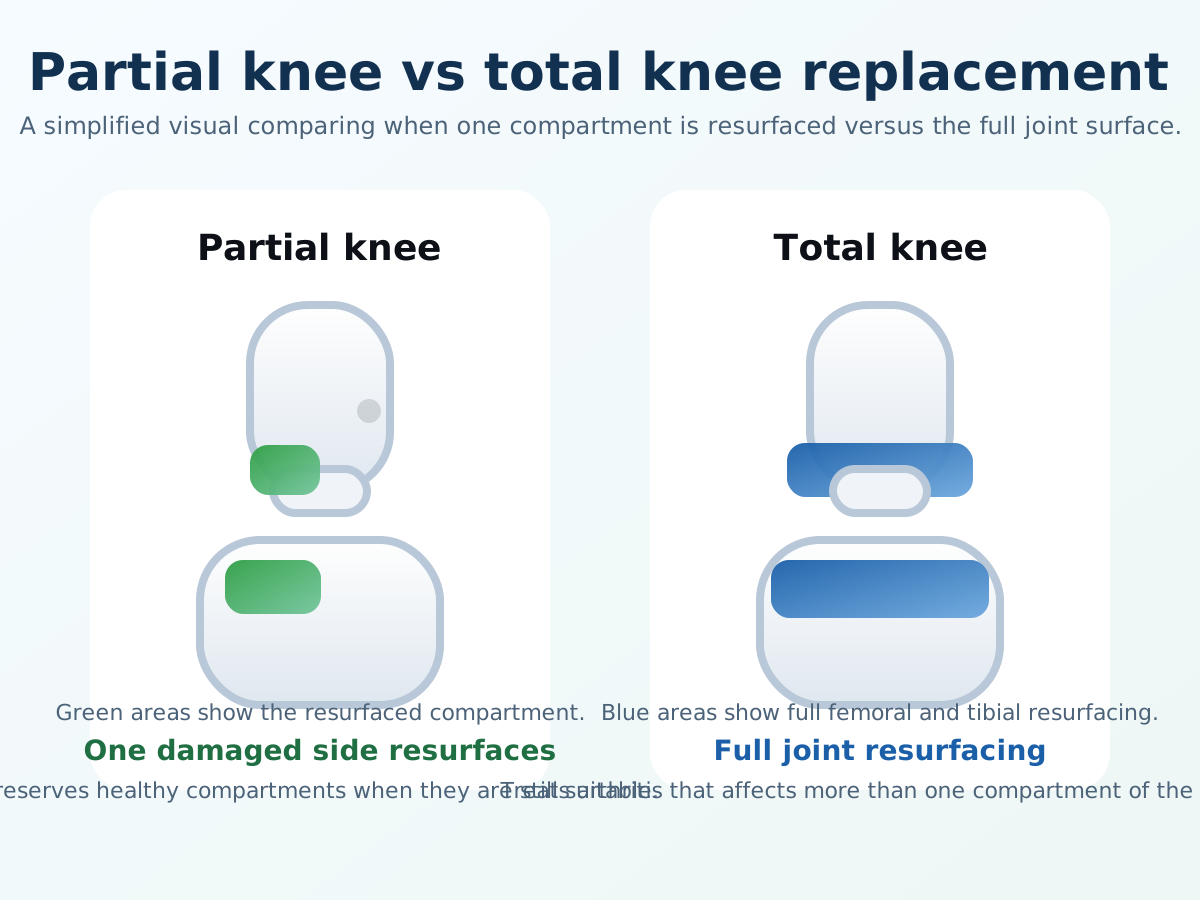
Some patients need total knee replacement, while selected patients may be candidates for partial knee replacement.

02

Alignment philosophy

Mechanical and kinematic alignment strategies can both be appropriate. The decision depends on anatomy and surgeon judgment.

03

Recovery support

Safe recovery depends on pain control, early walking, range of motion, home support, and a clear physical therapy plan.

Care Pathway

What happens before surgery

1

Diagnosis

Symptoms, exam, X-rays, and deformity are reviewed.

2

Timing

The surgeon explains whether nonsurgical options still make sense.

3

Alignment

The plan addresses joint line, ligament balance, and implant position.

4

Recovery

Discharge, therapy, medication, and home safety are planned early.

Patient Questions

Common questions

How do I know it is time?

It may be time when knee pain limits walking, stairs, sleep, work, or activities despite reasonable nonsurgical care.

What does kinematic alignment mean?

It is a patient-specific alignment strategy that may be considered when restoring native knee geometry is safe for the patient's anatomy.

How soon do patients walk?

Many patients walk the day of surgery with assistance, but the pace depends on health, pain control, strength, and surgeon guidance.

Will I need therapy?

Most patients need a structured recovery plan focused on walking, swelling control, strength, and range of motion.

Sources

Patient education references used for this page: AAOS Total Knee Replacement, AAHKS Total Knee Replacement, and peer-reviewed review/meta-analysis on kinematic vs. mechanical alignment patient-reported outcomes.

Next Step

Find out whether your knee is ready.

A TJS knee replacement specialist can review your symptoms, alignment, X-rays, and goals and explain your options.

Schedule Appointment