Partial Knee Replacement

Replacing only the worn part of the knee when the rest can be preserved.

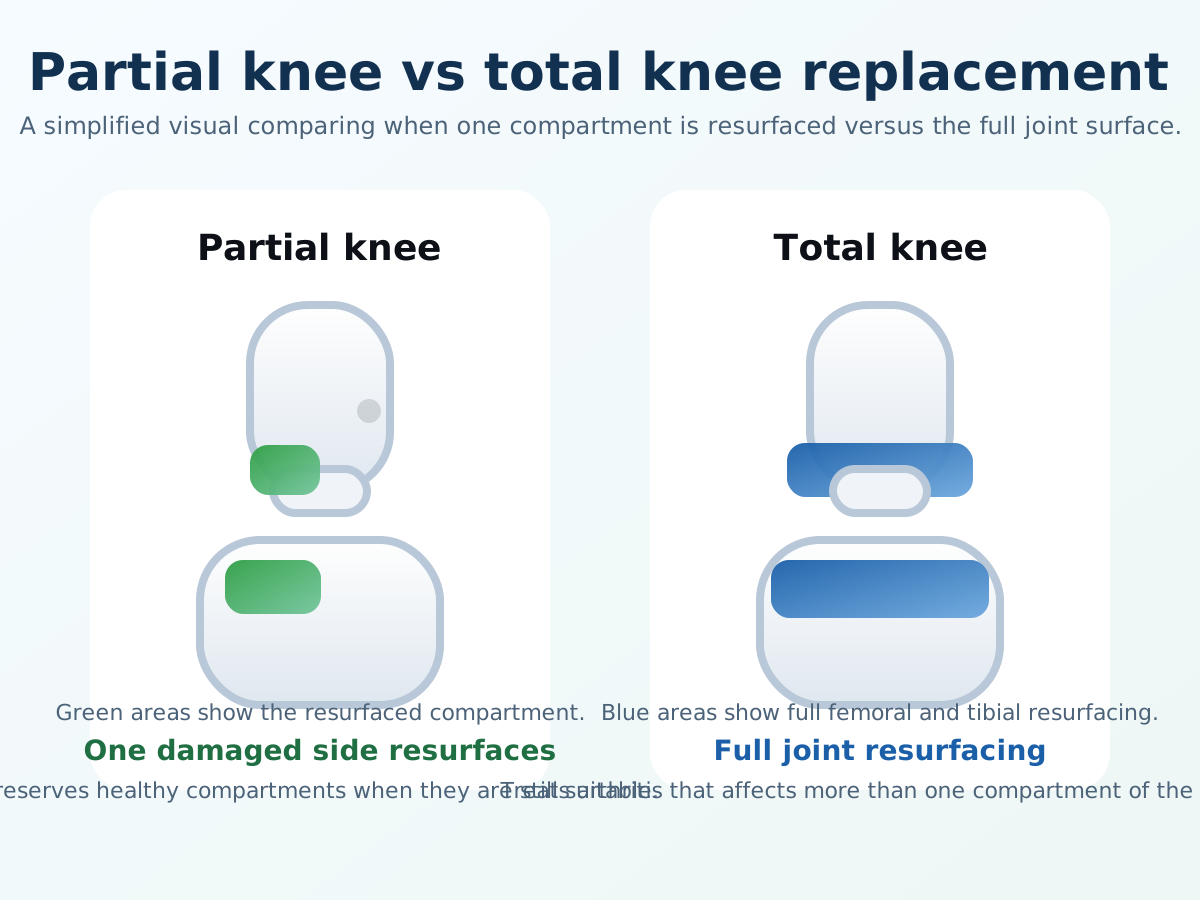
Partial knee replacement, also called unicompartmental knee replacement, resurfaces one damaged compartment of the knee while preserving healthy cartilage, bone, and ligaments elsewhere.

Knee alignment and joint surface illustration
Direct Answer

What is partial knee replacement?

A partial knee replacement replaces only the diseased compartment of the knee. It may be considered when arthritis is limited to one area and the ligaments, motion, and remaining joint surfaces are suitable.

It is not simply a smaller version of total knee replacement. The key question is whether the knee arthritis is truly isolated enough for a partial replacement to make sense.

At TJS: the decision is made by matching symptoms, X-rays, ligament quality, deformity, activity goals, and the surgeon's intraoperative judgment.
Candidacy

Questions that decide whether partial knee fits

01

Where is the arthritis?

Partial knee replacement works best when damage is isolated to one compartment, not spread throughout the knee.

02

Are the ligaments healthy?

Ligament stability matters because the preserved knee structures continue guiding the replacement.

03

Is total knee safer?

If arthritis, stiffness, deformity, or instability is too extensive, total knee replacement may be the better operation.

Specialist Take

Partial knee replacement is a selection decision.

For the right patient, partial knee replacement may mean less surgical disruption and a knee that feels more natural. For the wrong patient, it may leave untreated arthritis behind. That is why evaluation by a knee replacement specialist matters.

Patient Questions

Common questions

Is recovery faster?

Many appropriate candidates recover faster than after total knee replacement, but recovery varies by health, pain control, and surgical findings.

Can it become a total knee later?

Yes. If arthritis progresses or the implant fails, partial knee replacement can sometimes be converted to total knee replacement.

Does it feel more natural?

It can, because more native knee tissue is preserved, but the result depends on patient selection and surgical execution.

Who should not have it?

Patients with inflammatory arthritis, major stiffness, ligament damage, or arthritis in multiple compartments may not be candidates.

Sources

Patient education references used for this page: AAOS Unicompartmental Knee Replacement, AAHKS Full vs. Partial Knee Replacement, and AAHKS Surgical Options for Knee Arthritis.

Next Step

Find out whether your knee is partial-knee ready.

A TJS knee replacement specialist can review whether the arthritis pattern is limited enough for a partial replacement.

Schedule Appointment